Français
 Español
 Italiano
 Deutsch
Shopping Cart


The masonic columns are among the most recognisable symbols of Freemasonry. Present in the Temple, on lodge tracing boards and in certain masonic regalia, they evoke both the architecture of Solomon's Temple and the symbolic construction of the human being.
The two best-known columns are Jakin and Boaz. They symbolically frame the entrance to the Temple and represent two complementary principles, traditionally associated with establishment and strength.
But the term "columns" also has other meanings in masonic vocabulary. It notably designates the two sides of the lodge, the column of the North and the column of the South, where the brethren sit during the works.
This guide looks back at the origin, symbolism and role of the masonic columns, from Jakin and Boaz to the columns of the Temple and the lodge, to better understand their place in the initiatory tradition and the various masonic rites.
What do the masonic columns represent?
The masonic columns notably represent the two symbolic columns of Solomon's Temple, called Jakin and Boaz. They traditionally evoke stability, establishment and strength. In the lodge, the term "columns" also designates the spaces of the North and South, which symbolically structure the freemason's progression from darkness towards light.
Jakin and Boaz: the two columns of Solomon's Temple
The origin of the masonic columns Jakin and Boaz is traditionally linked to the biblical account of the building of Solomon's Temple in Jerusalem. Two bronze columns, placed at the entrance to the Temple, are named Jakin and Boaz.
In masonic tradition, these two columns have become major symbols. They are generally represented by the letters J and B and hold an important place in the ritual space and in many lodge tracing boards.
Their interpretation may differ according to rites and traditions. The position of the columns, their ornaments or their graphic representation can vary, notably in the descriptions of the bases, capitals and decorative elements.
Jakin and Boaz in a few words
Jakin is traditionally associated with the idea of establishment and stability.
Boaz is traditionally associated with strength and the capacity to sustain.
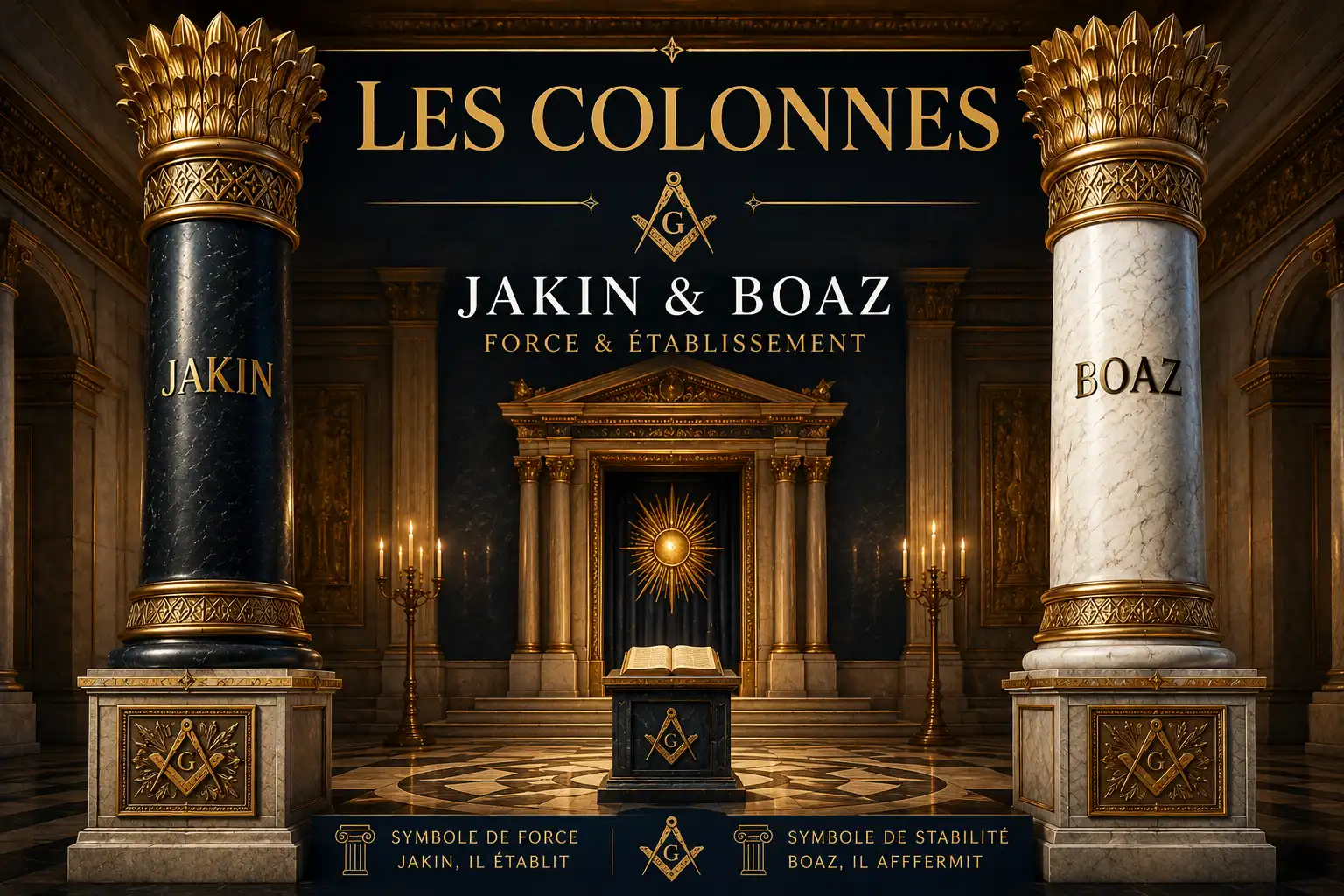
Together, Jakin and Boaz thus form a symbol of complementarity: strength and stability, establishment and support. This symbolic reading accompanies the broader idea of construction which lies at the heart of the masonic approach.
The symbolism of the masonic columns
Beyond their historical and biblical origin, the masonic columns hold a strong symbolic dimension. They represent the idea of construction, balance and stability, all essential notions within the initiatory tradition.
Jakin traditionally evokes that which is established and founded, while Boaz refers to the strength needed to sustain and maintain the construction.
Together, the two columns can be understood as an invitation to seek a balance between the solidity of the foundations and the strength required to progress. This construction can be understood both collectively, through the image of the Temple, and individually, through the freemason's work upon himself.
Jakin: establishment
Jakin is traditionally associated with the idea of foundation, establishment and permanence.
Boaz: strength
Boaz traditionally evokes strength, support and the capacity to carry the construction.
Balance
Together, the two columns evoke the complementarity and balance necessary to any construction.
This symbolism explains why the columns appear on many masonic regalia. Their representation can be found on aprons, jewels, collars or lodge tracing boards, depending on the degrees and rites concerned.
The columns of the lodge: North and South
In masonic vocabulary, the term "columns" does not only refer to Jakin and Boaz. It is also used to speak of the two sides of the lodge: the column of the North and the column of the South.
Traditionally, the brethren sit on either side of the Temple, according to their degree and the customs of the rite practised. In many traditions, apprentices are associated with the column of the North, while fellow-crafts and masters occupy the column of the South.
This spatial organisation carries a symbolic dimension. The North is traditionally associated with less direct light, while the South represents light more fully. The freemason's symbolic movement can thus be understood as a gradual journey towards knowledge.
The column of harmony
In masonic vocabulary, the column of harmony traditionally designates the function or the group of brethren responsible for the music that accompanies the works of the lodge. It thus contributes to the atmosphere and rhythm of the ceremonies.
The columns on the lodge tracing board
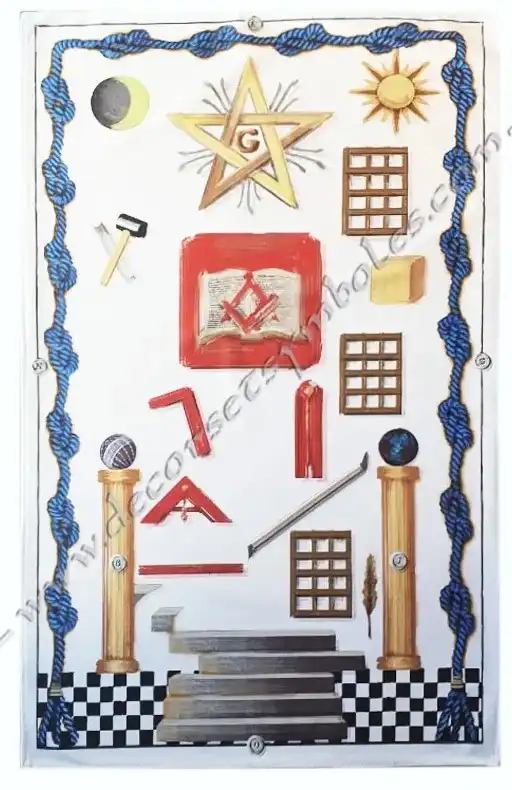
The masonic columns also appear on the lodge tracing board, sometimes called the lodge carpet in certain traditions. This symbolic medium brings together the main elements needed to understand the degree and accompanies the works of the lodge.
Jakin and Boaz may be represented on either side of the composition, surrounding the other symbols associated with the degree concerned. Depending on the rites and degrees, the tracing board may also feature the mosaic pavement, the blazing star, the square, the compasses or other symbolic elements.
A symbolic and educational medium
The lodge tracing board visually brings together the symbols evoked during the works. It thus serves as a medium for reflection, transmission and meditation.
The columns hold an important place there, recalling the symbolic threshold of the Temple and the principles of construction associated with Jakin and Boaz.
The masonic columns according to the rites
Like many elements of masonic symbolism, the columns can be interpreted and represented differently depending on the masonic rite practised.
The Ancient and Accepted Scottish Rite (AASR), the French Rite and the Rectified Scottish Rite (RSR) each have their own traditions and customs regarding the representation of Jakin and Boaz.
The differences may concern the position of the columns, their representation, their ornaments or the way in which they are integrated into the tracing boards and regalia associated with the different degrees.
A shared symbolism, different traditions
While Jakin and Boaz form a widely shared symbol within masonic tradition, their representation and interpretation can vary according to the rites and customs of the different obediences. These differences contribute to the richness of masonic diversity.
Finding the symbolism of the columns in masonic regalia
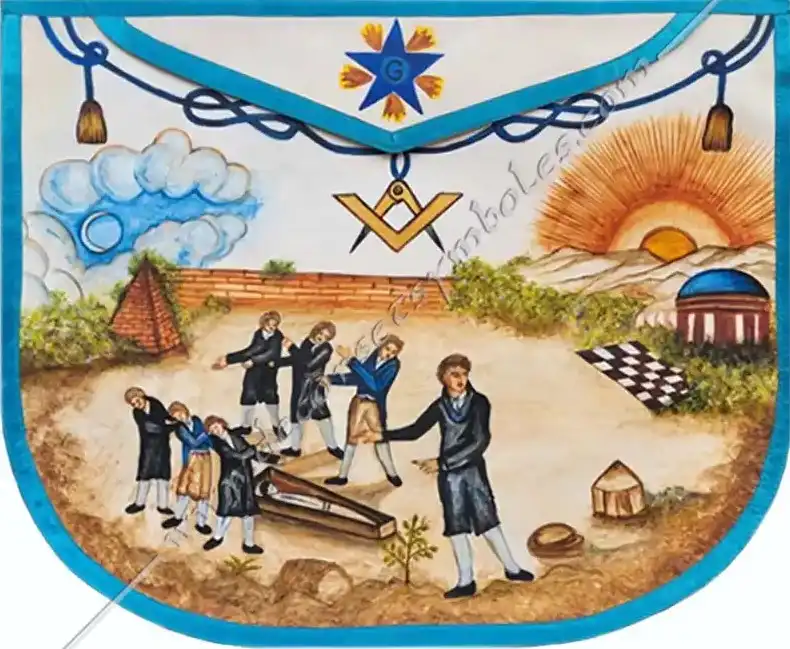
The symbolism of Jakin and Boaz can be found in many masonic items of regalia. The columns may notably appear on aprons, jewels, collars and lodge tracing boards.
At Décors et Symboles, we pay particular attention to respecting the traditions and codes specific to the various rites. The Fellow Craft lodge carpet of the AASR, for example, incorporates the columns among the main symbols that make up the whole.
These symbols are also present in certain embroideries of masonic aprons and in various jewels or collars intended for brethren and officers.
The columns: two pillars of masonic tradition
Jakin and Boaz are not mere decorative elements. They form a powerful symbol of masonic tradition and remind us that every construction rests on solid foundations and on the strength needed to maintain them.
To learn more about their history and symbolism, our masonic books allow you to go further in the study of the Temple, the rites and the many symbols that structure the initiatory journey.
Frequently asked questions about masonic columns
What are the Jakin and Boaz columns?
Jakin and Boaz are the two columns traditionally associated with the entrance to Solomon's Temple. They hold an important place in masonic symbolism and notably represent notions of establishment and strength.
What do Jakin and Boaz symbolise in Freemasonry?
Jakin and Boaz are traditionally associated with stability, establishment, strength and support. Together, they can symbolise the balance necessary to any construction, notably the symbolic construction of the freemason.
What are the columns of the North and South?
The columns of the North and South refer to the two areas of the lodge where the brethren sit during the works. Their arrangement also carries a symbolic dimension linked to the progression from darkness towards light.
Why are the columns represented on lodge tracing boards?
The Jakin and Boaz columns are among the symbols found on lodge tracing boards. They help to symbolically represent the entrance to the Temple and to recall the principles associated with construction and balance.
Are the columns identical in all masonic rites?
No. The representation, position and certain symbolic details of the columns can vary according to the rite, degree and traditions of the obedience or lodge.