Français
 Español
 Italiano
 Deutsch
Shopping Cart


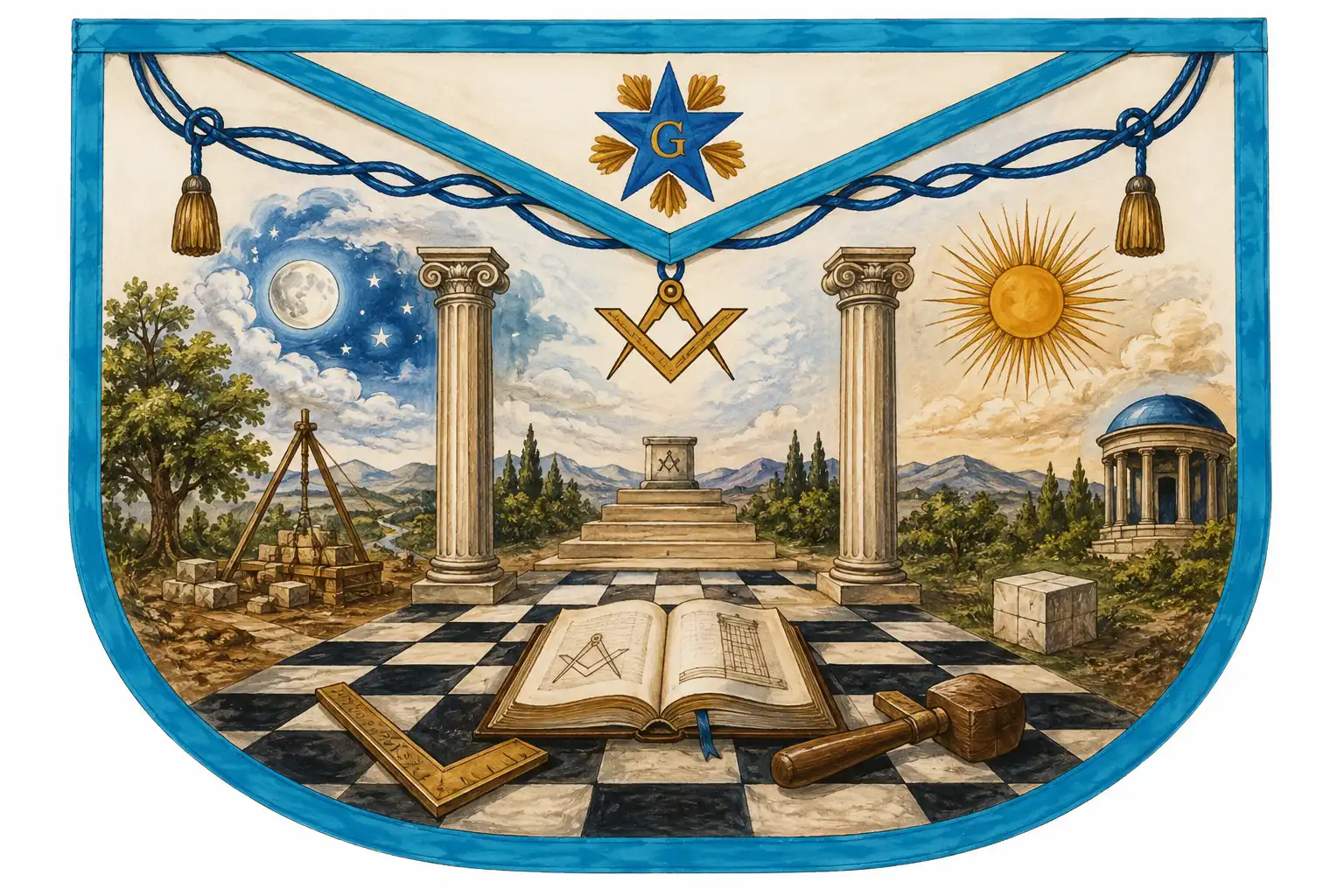
The masonic lodge carpet, also called the tracing board, is one of the richest symbolic supports in masonic tradition. Drawn, printed or embroidered on fabric, it accompanies the works and brings together, in a single composition, the main symbols associated with the degree concerned.
Present in many masonic traditions, the tracing board allows the symbolic elements evoked during the works to be visualised. It is thus a support that is at once symbolic, pedagogical and meditative, accompanying the Freemason along their initiatory path.
Its composition, however, is never universal. A lodge carpet intended for an Apprentice does not necessarily present the same symbols as a Fellow Craft's or a Master's carpet. Likewise, a tracing board of the Ancient and Accepted Scottish Rite does not necessarily follow the same organisation as one of the French Rite, the Rectified Scottish Rite or the Emulation Rite.
Understanding the history and symbolism of the lodge carpet therefore allows one to better appreciate this essential element of the Temple and to choose a model faithful to the degree and rite practised.
What is a masonic lodge carpet?
A masonic lodge carpet, also called a tracing board, is a symbolic support representing the main elements associated with a masonic degree and rite. It accompanies the lodge's works and visually brings together symbols such as the columns, the mosaic pavement, the blazing star, the square and compass. Its composition varies according to the degree, the rite and the traditions of the lodge.
The origin of the lodge carpet
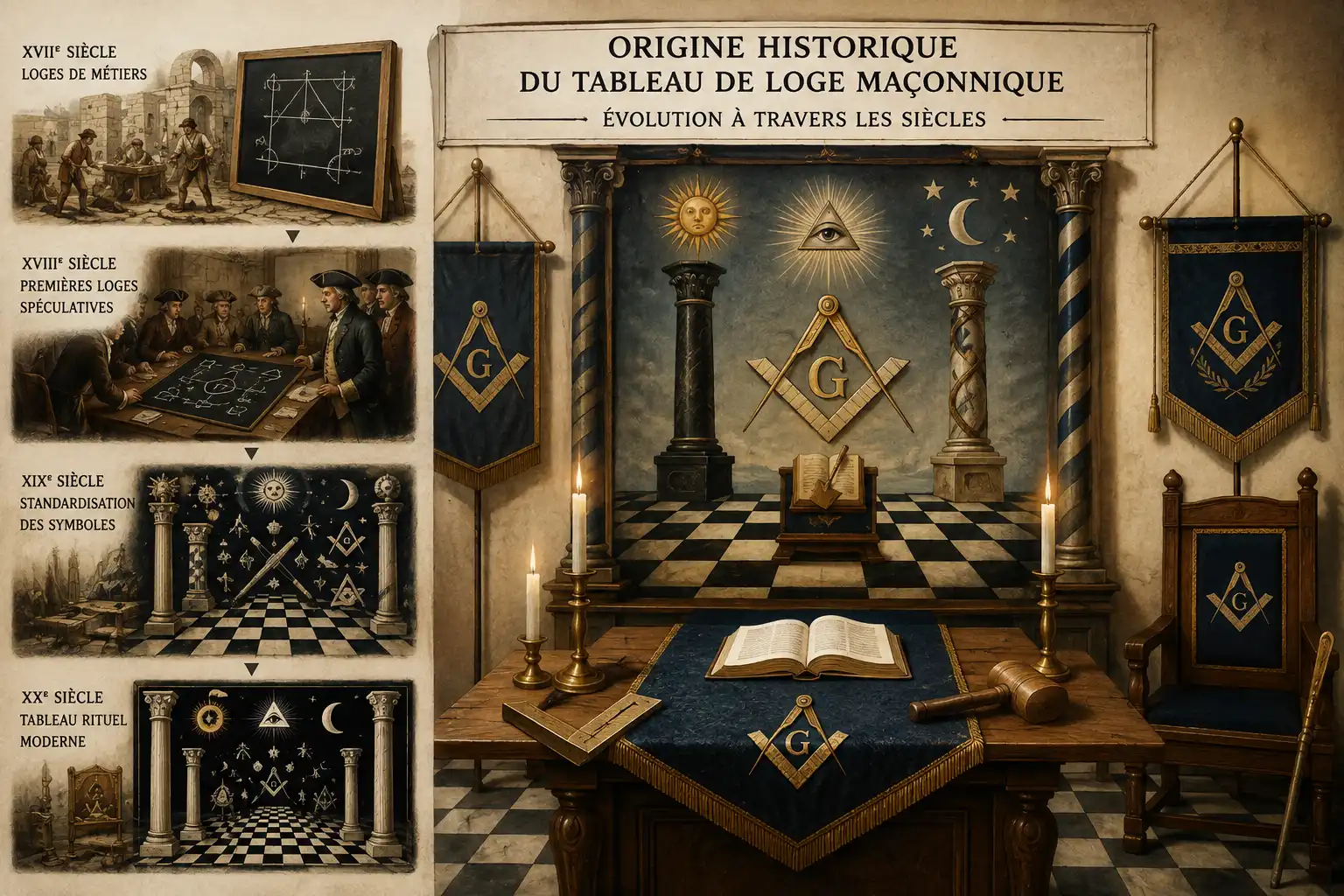
The history of the masonic lodge carpet is closely linked to the evolution of masonic ritual practices. Before the appearance of permanent tracing boards as we know them today, the symbols needed for the works could be traced directly on the lodge floor.
These drawings were made temporarily, notably using chalk or other easily erasable materials. The term "tracing board" notably recalls this ancient practice: the symbols were laid out to accompany the works, then erased at their close.
This practice also answered a need for discretion. The symbolic representations used during the works were not meant to remain visible once the meeting had ended.
Progressively, temporary supports gave way to more durable representations. The tracing board was then produced on various supports, notably fabric, before taking the form of the embroidered or printed lodge carpet found today in many lodges.
From the traced board to the lodge carpet
The contemporary lodge carpet retains the essential function of the traditional tracing board: bringing together, in a single space, the symbols needed to understand the works and the degree.
The symbolism of the lodge carpet
The tracing board is a genuine visual synthesis of the teachings associated with a degree. The various symbols represented on it are not simply juxtaposed: their position and their relationship to one another contribute to the symbolic reading of the whole.
The carpet can thus be considered a support for reflection. It allows the Freemason to visually rediscover elements addressed during the works and to progressively deepen their meaning.
This dimension explains why the design of a lodge carpet demands great care. The placement of a symbol, its representation or its absence can hold particular importance depending on the degree and rite concerned.
The lodge carpet therefore plays a role that is at once pedagogical, symbolic and contemplative. It helps create a coherent environment within which the symbols take their place and accompany the course of the works.
A support for transmission
The lodge carpet brings together, in a single composition, symbols whose meaning is progressively deepened over the course of the initiatory journey. It thus forms a link between what is transmitted orally and what is represented visually.
The main symbols represented on a lodge carpet
Depending on the degree and rite, a lodge carpet can bring together numerous symbols drawn from masonic tradition. Some are widely known, while others appear only in certain degrees or certain ritual traditions.
The columns
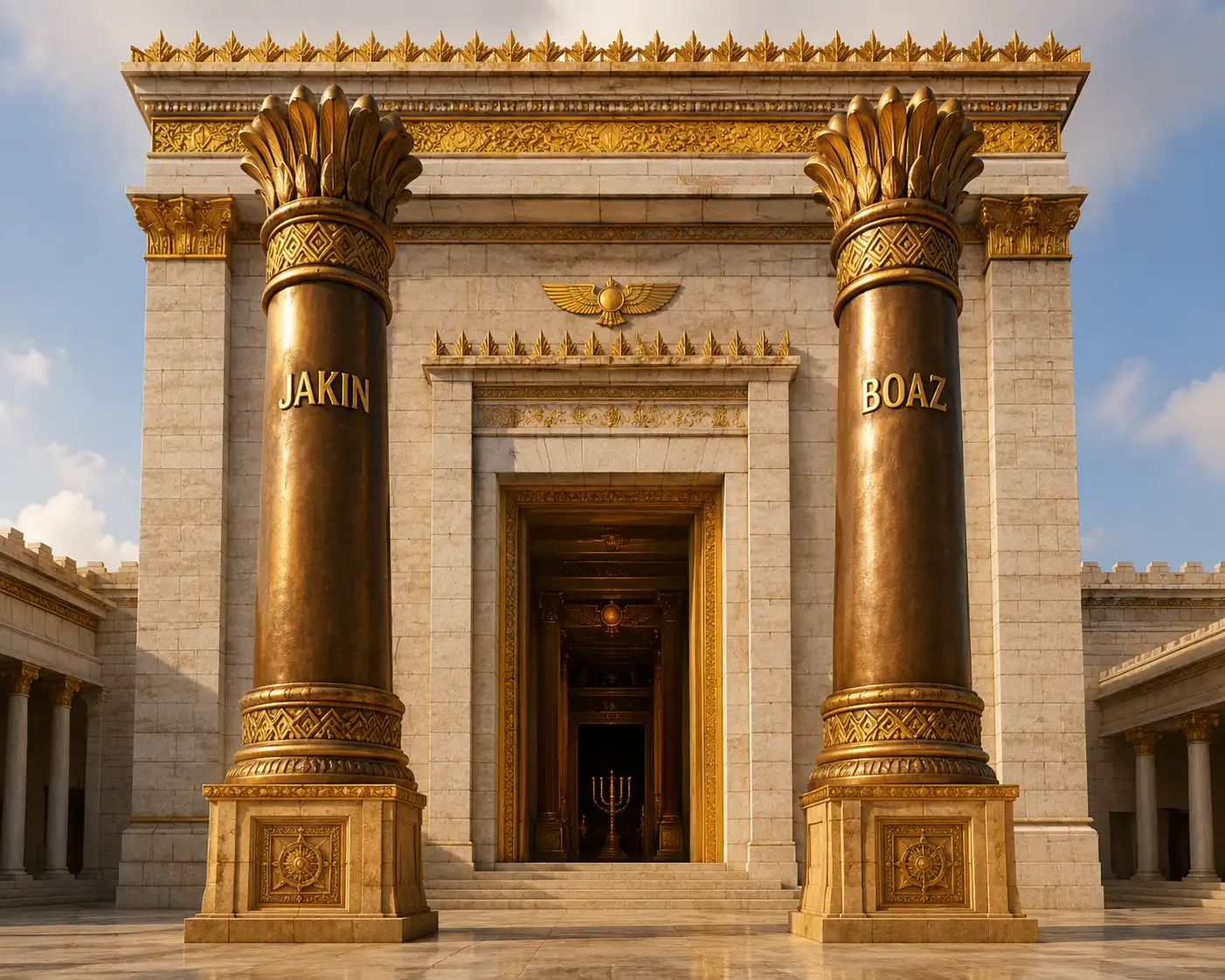
The columns Jakin and Boaz feature among the symbols associated with the entrance to the Temple and the tradition of Solomon's Temple.
The mosaic pavement
The black-and-white pavement notably evokes the oppositions and complementarities that structure masonic symbolic reflection.
The blazing star
It holds an important place in certain degrees and notably symbolises light and knowledge.
The square and compass
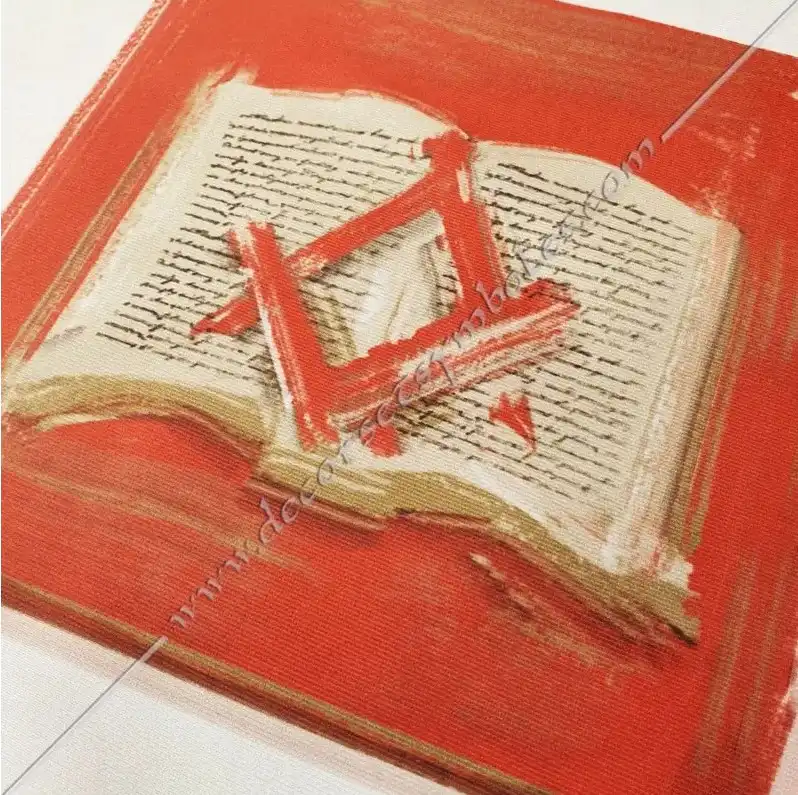
These two emblematic tools are associated with numerous symbolic interpretations linked to building and self-mastery.
Other elements may also appear, such as the letter G, the Sun, the Moon, the tools of the mason's trade or various architectural elements. Their presence always depends on the degree and rite to which the tracing board is associated.
A different carpet for each degree
There is no single model of lodge carpet valid for all Freemasons. The composition of the tracing board evolves according to the degree it is intended for.
The carpet associated with the degree of Apprentice highlights certain fundamental symbols of the initiatory approach. That of the Fellow Craft introduces or develops other elements linked to progression and symbolic work. The Master's tracing board, in turn, has its own composition and its own reading.
This progression allows the lodge carpet to accompany the Freemason's journey. At each stage, new elements may appear or take on a different meaning, according to the teachings associated with the degree.
A tracing board for every stage of the journey
The lodge carpet accompanies the initiatory progression. It is therefore essential to check the degree concerned before choosing or ordering a tracing board.
Apprentice
The first degree of the initiatory journey has a symbolic composition specific to the Apprentice's teaching.
Fellow Craft
The Fellow Craft's tracing board highlights the symbols corresponding to the progression and work of the second degree.
Master
The third degree has its own set of symbols and a composition adapted to its teaching.
A different carpet for each rite
The degree is not the only element that determines the composition of a lodge carpet. The rite practised by the lodge also plays an essential role.
The Ancient and Accepted Scottish Rite (AASR), the French Rite, the Rectified Scottish Rite and the Emulation Rite each have their own traditions and their own ways of organising symbols.
Differences may concern the elements represented, their arrangement, their colours, their proportions or their symbolic interpretation.
This diversity explains why it is important to choose a lodge carpet faithful to the rite and degree. A generic model may not correspond to the customs of the lodge or may present symbols in an organisation that does not respect the tradition concerned.
AASR
The Ancient and Accepted Scottish Rite has a rich symbolic tradition and numerous degrees associated with specific compositions.
French Rite
The French Rite has its own symbolic traditions and its own tracing board compositions according to degree.
Rectified Scottish Rite
The Rectified Scottish Rite develops a particular symbolic tradition reflected in the organisation of its lodge carpets.
Drawing, printing or embroidery: how is a lodge carpet made?
Lodge carpets can be made using different techniques. Some are drawn or printed on fabric, while others are wholly or partly embroidered.
The manufacturing technique directly influences the visual rendering, the precision of the symbols and the lifespan of the support. A carpet intended for regular use must be designed with suitable materials and finishes sturdy enough to withstand handling and storage.
Embroidery notably brings particular depth and relief to the representations. It also allows certain details to be highlighted and creates an object intended to durably accompany the works of the lodge.
Beyond the technique, the quality of a carpet rests above all on the precision of its composition and on respect for the symbolic elements associated with the degree and rite.
The precision of the symbols
Every element must be carefully represented in order to preserve the overall coherence of the tracing board.
Faithfulness to the degree and rite remains an essential criterion when designing a lodge carpet.
How to choose your lodge carpet well
Choosing a masonic lodge carpet requires several criteria to be taken into account. The first, of course, is the correspondence between the carpet and the degree and rite practised by the lodge.
Next comes the manufacturing quality. The precision of the symbols, the quality of the fabric, the sturdiness of the finishes and the resistance of the embroidery or printing are all elements that determine the durability of the tracing board.
Dimensions are also an important point. The carpet should naturally find its place in the space intended for the works, while remaining sufficiently visible to fulfil its symbolic role.
Finally, ease of storage and maintenance should be taken into consideration. A quality carpet must be able to be kept between meetings under suitable conditions in order to durably preserve its colours, embroidery and support.
Essential criteria to remember
- Check the correspondence with the degree concerned.
- Choose a model faithful to the rite practised.
- Check the precision and coherence of the symbols.
- Favour sturdy fabric and finishes.
- Check the dimensions suited to the lodge.
- Plan storage that allows the lodge carpet to be durably preserved.
Our Fellow Craft lodge carpet (AASR)
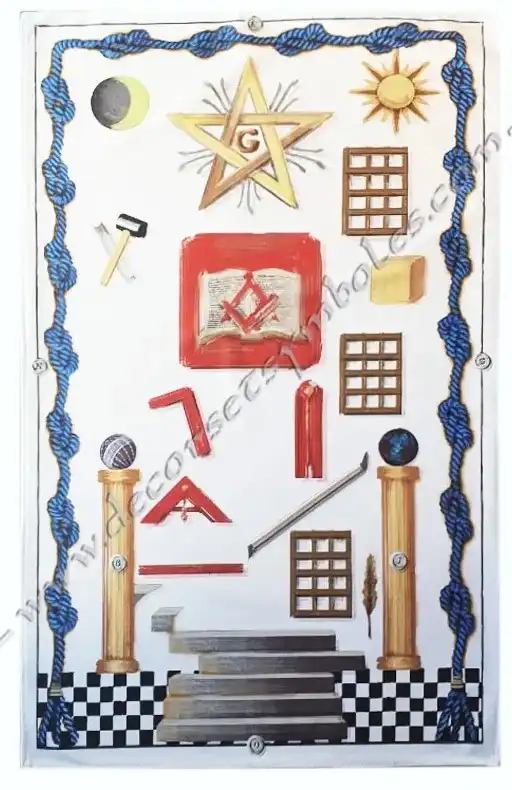
At Décors et Symboles, we offer notably a Fellow Craft lodge carpet in the Ancient and Accepted Scottish Rite (AASR), designed to represent the main symbolic elements associated with this degree.
The columns of the Temple and the other symbols represented on this tracing board contribute to the overall composition and allow the elements associated with the Fellow Craft's work to be visually rediscovered.
The design of this carpet is based on particular attention paid to symbolic faithfulness, the quality of the representation and the durability of the support.
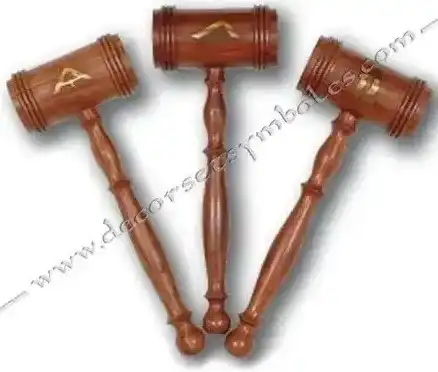
Also discover our lodge tools and accessories, our masonic regalia and our masonic books to deepen your understanding of the history and symbolism of the elements that make up your lodge carpet.
A tracing board designed to accompany the works
The Fellow Craft's lodge carpet brings together the main symbols of the degree in a composition that is coherent and faithful to AASR tradition.
It is at once an element of the working space and a support for reflection on the symbols associated with the initiatory journey.
Choosing a lodge carpet faithful to your degree
To choose a tracing board, it is essential to check its correspondence with the degree and rite practised. This faithfulness helps preserve the symbolic coherence of the works and respect the traditions specific to each lodge.
Frequently asked questions about the masonic lodge carpet
What is the difference between a lodge carpet and a tracing board?
The two terms generally designate the same symbolic support. The term "tracing board" recalls the origin of symbolic representations once temporarily traced in the lodge, while "lodge carpet" more often designates the permanent support made on fabric.
What is a masonic lodge carpet used for?
The lodge carpet brings together the main symbols associated with a degree and accompanies the works. It serves as a visual, symbolic and pedagogical support allowing the elements evoked during the meeting to be rediscovered.
Is there a different lodge carpet for each degree?
Yes. The composition of a tracing board generally evolves according to the degree. Carpets intended for the degrees of Apprentice, Fellow Craft and Master may thus present different symbols and organisation.
Is the lodge carpet the same across rites?
No. The AASR, the French Rite, the Rectified Scottish Rite and the Emulation Rite each have their own traditions. The composition and organisation of symbols can therefore vary according to the rite and degree.
What symbols are found on a lodge carpet?
Depending on the degree and rite, a tracing board may notably represent the columns Jakin and Boaz, the mosaic pavement, the blazing star, the square and compass, the letter G or various tools and architectural elements.
How do I choose a masonic lodge carpet?
First check its correspondence with the degree and rite of the lodge. Then consider the quality of the support, the precision of the symbols, the dimensions and the sturdiness of the finishes.